
The news windows you must not trade through, marked before they open
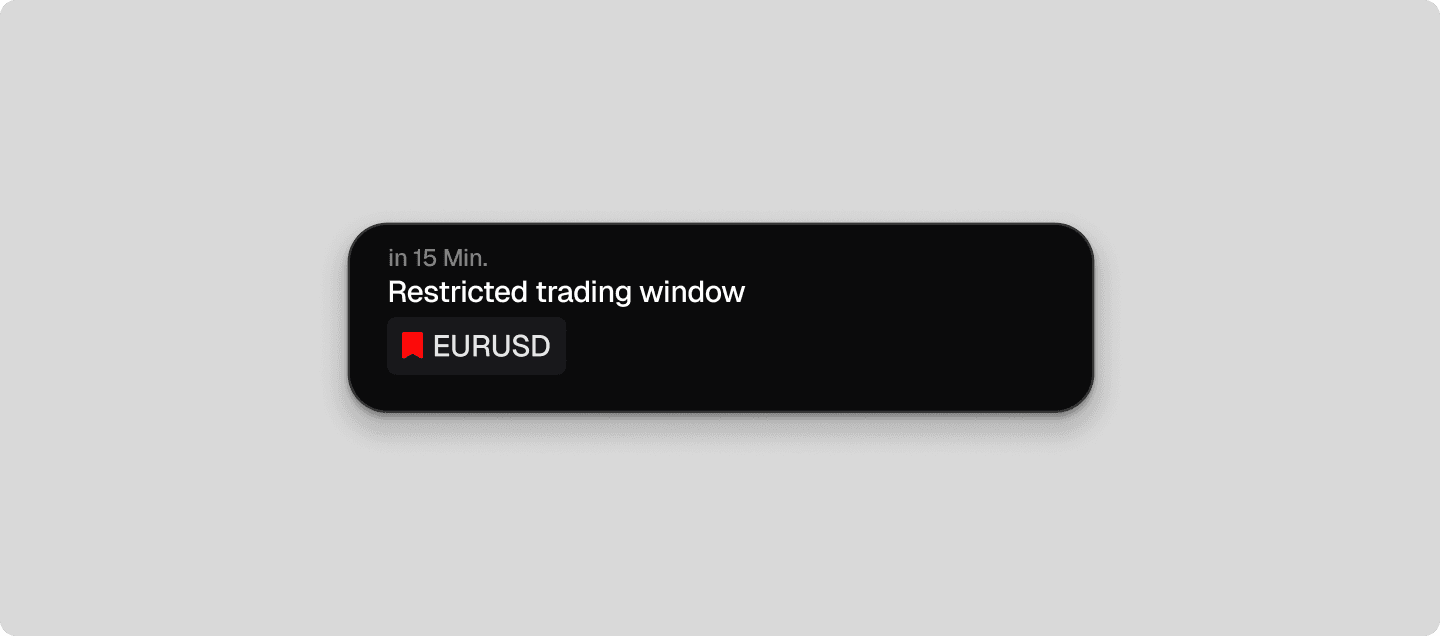
A news-trading rule is the easiest rule in prop trading to break by accident. The setup is valid, the risk is correct, the entry happens to be two minutes before a CPI print — and the account is gone on a technicality rather than on a loss. Pulse is built to put the economic calendar and your firm's rule in the same panel as the position.
In build, with a closed group of traders using it.
The rule is about timing, not opinion
Most firms restrict trading in a window around high-impact releases: non-farm payrolls, CPI, rate decisions, central bank press conferences. The width of that window and the list of events it applies to vary from firm to firm, and neither is usually where you are looking when a setup appears.
Nothing about the trade changes inside the window. Only whether it counts. So Pulse will mark the window before it opens, filtered to the instruments on your watchlist — a EURUSD position is flagged for an ECB decision, not for something in a market you never trade.
Nothing about the trade changes inside a restricted window. Only whether it counts.
Spread widening is the second tax
Even where news trading is permitted, execution around a release is not the execution you sized for. Spreads widen, slippage grows, and a stop placed 8 pips away is filled somewhere else entirely. A position sized under normal conditions quietly becomes a position at a different risk.
Recent releases stay in view for the same reason. When a market has already moved, it matters whether it moved on data or on a level — the first changes what the next hour is likely to look like. What widening costs do to a risk plan is worked through in why a 1% risk plan can cost you 1.3%.
A calendar, not a crystal ball
Pulse is deliberately not predictive. It does not forecast direction, score the surprise against consensus, or suggest a trade. It will report scheduled events, the restricted windows your rules attach to them, and what has just been released.
That is the whole job: the facts a rule is enforced on, in front of you before the rule is enforced. For the rules themselves — who restricts what, and how far either side of a release — start with the education library.
What it does
- Scheduled high-impact events, filtered to the instruments on your watchlist.
- Restricted trading windows marked ahead of the release, not reported after the breach.
- Recent news kept in view, so you know when data moved the market you are in.
- Nothing predictive: this is the economic calendar and the rule, not a signal.